


Biltong is South Africa’s air-dried meat snack — beef, seasoned with vinegar and spices, then dried slowly in the air rather than cooked. And yes, you can make it at home. It’s not difficult; it just needs a lean cut of beef, the right spice, and a few days of patience.
What you need
Biltong is a simple thing at heart — beef, vinegar, salt and spice. The spice is what makes it biltong and not something else, and the signature note is coriander.
- Beef — any cut, but ideally inside or outside rounds.
- Any regular vinegar but ideally Brown spirit vinegar — for the dip that seasons and protects the meat.
- Coarse salt.
- Coriander seeds — toasted, then coarsely crushed. This is the flavour that defines biltong.
- Coarse black pepper.
- Optional: a little brown sugar in the rub, if you like a touch of sweetness.
You’ll also need somewhere cool and airy to hang it — a biltong box, a dehydrator on a low setting, or a well-ventilated spot with a fan. Airflow is the whole trick.
Step by step
- Cut the meat along the grain into strips roughly 2–3 cm thick. Trim fat off if you don’t like fatty biltong. Also remove the silver-like connective tissue on the surface of the meat
- Salt it. Rub the strips generously with coarse salt and rest them for about an hour, then brush off the excess.
- Dip in vinegar. Give each strip a quick dip in the brown vinegar — a few seconds, not a soak.
- Spice it. Coat the strips in your crushed coriander and black pepper (and brown sugar, if using).
- Hang it up. Hang the strips so they don’t touch, with air moving around each one, in a cool, dry place.
- Wait. Let it dry for 3–5 days, depending on the thickness of the strips and how much air is moving. Check daily.
- Slice and enjoy. Cut thinly across the grain. Biltong is ready when it’s firm on the outside but still gives a little in the middle.
How long does biltong take?
About 3 to 5 days for most home setups. Thinner strips and more airflow mean faster drying; thick strips in still air take longer. If you want it drier and harder, leave it a day or two more — it’s a matter of taste.
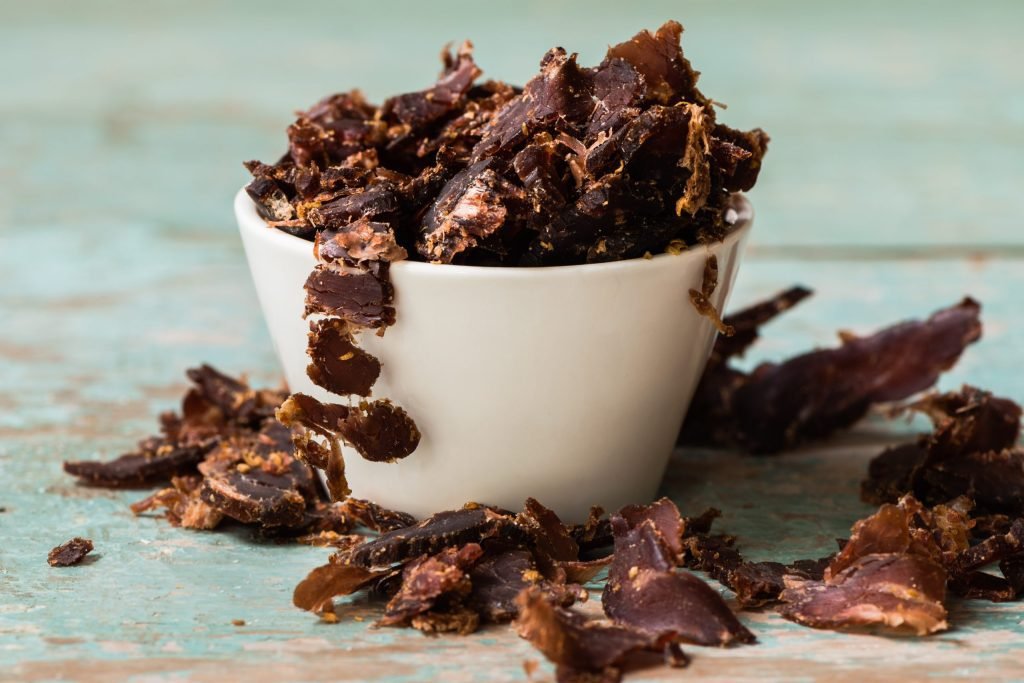
Biltong vs jerky
They’re cousins, but they’re made differently. Jerky is usually cooked or smoked with heat, often sweetened. Biltong is air-dried, seasoned with vinegar and coriander, with no heat — which is why it stays tender and savoury rather than tough and sweet.
Five tips for getting it right
- Airflow beats everything. If there’s no air moving, you get mould, not biltong. A small fan makes all the difference.
- Keep it cool and out of the sun. Warm and damp is the enemy.
- Don’t skip the coriander. It’s the flavour people recognise as biltong.
- Cut along the grain, slice across it. That’s what gives biltong its texture.
- Watch for mould.
Storing it
Biltong keeps best somewhere cool and dry. A paper bag works well because it breathes; a sealed plastic bag can trap moisture and undo all your good work. For longer storage, keep it in the freezer.
Or let us do it
Making biltong is a lovely weekend project — but if you’d rather skip the waiting, that’s what we’re here for. Our Bobaas Biltong is air-dried the old-fashioned way, and there’s more on our biltong shelf. Order online and get it delivered to your door.

